Coins: Medieval
coins: medieval — pre-owned
Browse 15,802 coins: medieval — pre-owned on eBay — listings updated every few minutes. All items are pre-owned and sold by eBay sellers directly.

(1250-1400) Germany Heller Schwabisch Hall GENUINE Right Hand Of God, Medieval
The product is a genuine 14th-century German Heller coin from Schwabisch Hall, featuring an image of the Right Hand of God. Made of silver and graded by Numismatic Guaranty Company (NGC), this European coin is a valuable piece of medieval numismatic history. With its unique design and historical significance, this coin would be a prized addition to any collection of European coins and artifacts from the Middle Ages.

Ancient Coin 850–1000 AD Silver Jital "Bull and Horseman" Design
History of the Hindu Shahi Silver Jital. The silver jital was the principal coin of theHindu Shahi Dynasty, which ruledGandhara, Kabul, and the upper Indus Valley from aboutAD 850 until 1026. A genuine silver jital generally has.
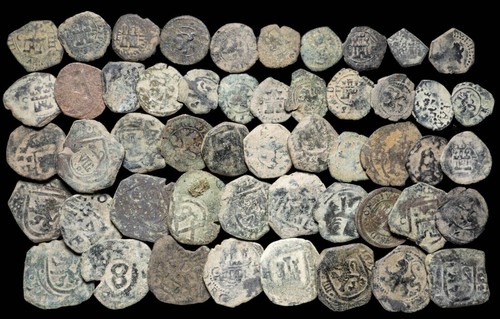
"Pirate Era" Spanish Copper Cob Treasure Coin + FREE Bonus Coin!
Delve into the rich tapestry of history with this authentic "Pirate Era" Spanish Copper Cob Treasure Coin, a genuine piece of numismatic heritage. Originating from Spain in the year 1600, this circulated coin is composed of copper, boasting a fineness that has withstood the test of time. Its unique color is as pictured, offering a tangible connection to the past. As a Real denomination coin, it reflects the era's currency standard. Although uncertified and worn, its allure lies in its unauthenticated state, making it a sought-after collectible for enthusiasts and historians alike. With the added bonus of an additional free coin, this purchase presents a remarkable opportunity to own a slice of history. Note: You will receive 2 coins from this lot.

Ottoman Suleiman I (Sulayman I) GOLD Sultani Misr Egypt mint 3.48g. AH926 1520AD
This coin is among a first wave release of the “R. Atherton collection of ancient biblical coinage”.
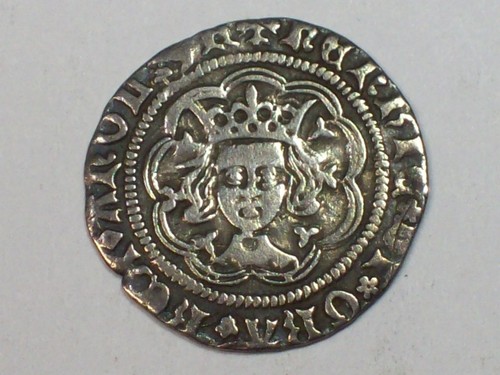
1422-1461 England Half Groat - Henry VI VF SP# 1862 SN8845
Here's a 1422-1461 England Half Groat, Henry VI, that grades Very Fine. This is listed as Spink# 1862 and is from the Calais Mint. The coin pictured is the one you will receive.
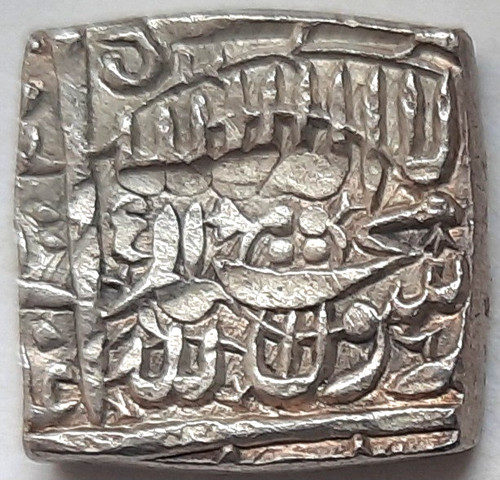
1556-1605, Mughal Emperor Akbar Square Silver Rupee-Ahmadabad Mint-Circulated.
([ – 27 October 1605 ), also known as Akbar the Great, was the third Mughal Emperor, who reigned from 1556 to 1605. Akbar succeeded his father, Humayun, under a regent, Bairam Khan, who helped the young emperor expand and consolidate Mughal domains in the Indian subcontinent. ].

Medieval Coin King Ferdinand & Queen Isabella 1497-1566 Blanca Nice Genuine
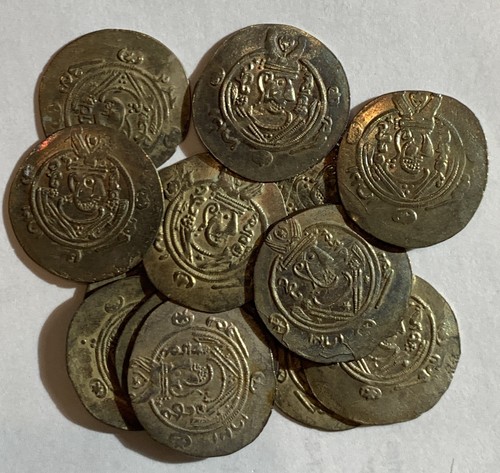
Arab-Sasanian. Tabaristan, 780-793. SILVER 1/2 Dirham. RANDOM PER COIN.
Tabaristan - Abbasid governors. 780-793 / PYE 125, 129-138 and 140-142. SILVER 1/2 Dirham. We are Great Houston leading professional world coin dealer, specializing in rare coins, world coins and currency, NGC and PCGS certified coins, and bullion.
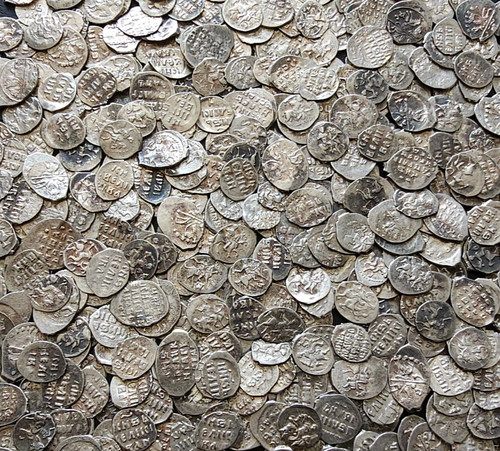
Coin Silver Kopek Ivan IV The Terrible 50 pcs 1533-1584 rouble ruble denga
1 lot= 50 coins Ivan IV The Terrible Silver coins.
You save $15.00

1216-72 England Penny Henry III AU50 ICG *9911
You will receive the exact item! .

1509-47 England 1/2 Groat Henry VIII MS62 ICG *9912
You will receive the exact item! .

Charles VI France Silver Blanc Guenar 1380-1422 NGC VF35 Saint Joan of Arc Era
Charles VI France Silver Blanc 1380-1422 NGC VF 35.
You save $53.65

IRELAND. Edward IV 1473) PENNY DROGHEDA S-6374F ONLY 4 KNOWN TO EXIST-VERY RARE
Third light cross and pellets issue, Burns group 5 (1473-79) type XII, pellet either side of crown and of neck, inner circle and legend surrounding partially off flan as per usual both sides, rev. long cross with tri-pellets in each inner angle, weight 0.43g (Burns DR-12 this coin; DF.136; S.6374F).

~~ 5 AUTHENTIC Ancient & Medieval History Artifacts ~~ The Archaeology Grab Bag~
The Archaeology Grab Bag. They are all carefully selected and researched. Other artifacts include coins, jewelry, and tools. I try to keep the selection diverse. The condition is not "New", but "Used".

GOTLAND, WISBY. King of Denmark Christian III. 1 Skilling. 1536
Gotland, Danish possession 1 skilling 1536. Mint -Visby, Gotland, Sweden. King of Denmark Christian III.

2 COINS OF MEDIEVAL GEORGIA. Queen Rusudan. 1223-1245
2 copper fals of Geogian Queen Rusudan. 4-line Arabic legend citing her titles: "Queen of Queens. daughter of Tamar.". 1,77 gr 12,5 mm.
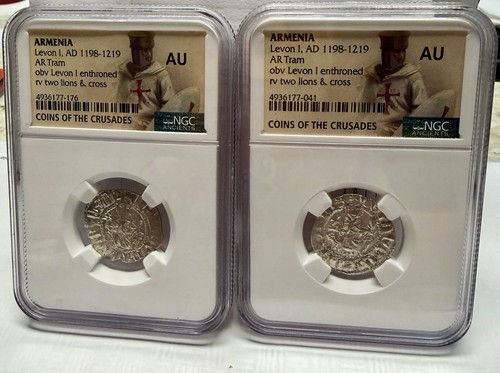
Pair Of Levon I Silver Tram Knights Templar Crusades Armenia 1198-1219Ad NGC AU

Arab Sasanian. KHUSRO II KING, DRACHM. XF
KHUSRO II KING, DRACHM. We are Great Houston leading professional world coin dealer, specializing in rare coins, world coins and currency, NGC and PCGS certified coins, and bullion.

Levon I Silver Tram Knights Templar Coin of Crusades Armenia 1198-1219 Ad NGC VF
Levon I Silver Tram Knights Templar Coin of Crusades. The coin's denomination is Tram, reflecting its historical significance and value during that period, making it a valuable addition to any coin collection or historical artifact display.
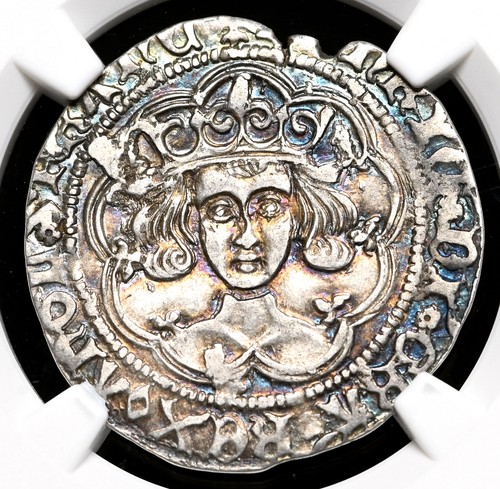
ENGLAND. Henry VI. 1422-1461. Silver Groat, S-1859, Calais, NGC AU53
NGC and PMG Authorized dealer. Extensive inventory in all price ranges.

One Medieval Armenian Silver Tram - Sis Cilician Armenia 1198-1219 AD - Levon I
Medieval Armenian Silver Tram - Sis Cilician Armenia 1199-1219 AD - Levon I.

King Edward I Silver Penny Medieval England Coin - SKU-AN0219
Size: about the size of a us cent. The coin pictured is the coin you will receive. See pictures for condition.
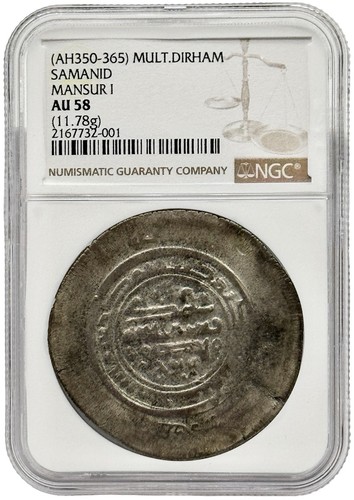
Viking Silver AH350-365 Samanid Dirham Mansur 1 NGC AU58 11.78 Grams
Please review all pictures. We do not alter any pieces. If you have any questions please ask. We combine shipping. Taxes may apply depending on your state. Please allow us 24-48 business hours to respond to messages. Orders paid day of auction ending usually go out same business day or next business day.

Hammered Medieval Hungarian Silver Coins! Small Chips, Great Detail!
Here we have something very fun, medieval silver coins at a price anyone can afford. Each order is for one medieval silver coin. Most of them are from Hungary. Age ranges from the 11th to the 17th century. With a huge variety of types, I'll try to make larger orders as diverse as possible. Since these coins are so thin, most have small chips but they are still stunning! The smaller chips I am adding randomly to orders as bonuses!

HUGO IV OF BURGUNDY (AD 1218 to AD 1272) SMALL 17 mm BILLON COIN - *95161618 🌈
Hugo IV (AD 1218 -- AD 1272) Burgundy (France). Refer to Photographs - Evaluate Condition & Grade.
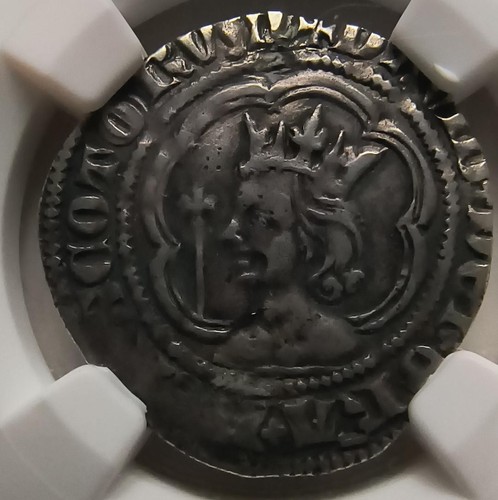
SCOTLAND DAVID II Halfgroat or Twopence (1357-1367)
NGC XF details, plugged. 22mm silver. Edinburgh mint. His crowned bust holding sceptre/Cross with stars in angles and mint VILLA EDINBURGH inside. Died childless, ending the rule of the House of Bruce.

IRELAND. James II, August 1689, Gunmoney, 1/2 Crown, S-6579B, NGC XF40
NGC and PMG Authorized dealer.

ISLAMIC, Ghorids of Bamiyan, Baha al-Din Sam, 1192-1206, AE Dirham, Balkh, RRR!
O: Octogram-in-circle. bi-Balkh / al-sultan al-a- / -zam Baha a- / -l dunya wa al-Din / Sam bin Muhammad ; date formula in margin. R:Allah / la ilah illa / Allah Muhammad ra-/ -ssul Allah al-Na- / -sir li-din.

ITALY Venice DOGE Silver Grosso Medival Coin
The product is a rare and valuable Italian states Venezia Doge Andrea Dandolo silver unit from the 14th century. This original piece features intricate Italian craftsmanship and design, making it a unique and collectible item for enthusiasts and collectors alike. The white color and silver material add to the elegance and authenticity of this historical artifact, perfect for adding a touch of old-world charm to any space.

1279-1307 Medieval England "Edward I" Silver Penny, S-1385 - NGC XF40! Superb!
Terrific Example for the Grade! The 1279 recoinage, of which Class 2a is an early and characteristic product, ranks among the most successful monetary reforms of the English Middle Ages. The basic type remained in production, with only stylistic evolution, through the reigns of Edward II and into the early years of Edward III (to 1344).

1300-1400 Germany Hall Silver Heller Hand Of God Genuine 1 Coin
Genuine from the German city of Hall struck in the 13&1400's.

HUNGARY. Stephen I, 997-1038. Silver Denar, Scarce, NGC AU Details
Stephen I, 997-1038. Silver Denar, Scarce, NGC AU Details. NGC and PMG Authorized dealer. Sancho, 1311-1324. Silver Dobler, NGC AU55. Republic of Novgorod, 1420-1478. Silver Denga, Scarce, NGC VF25.

Tabaristan Silver 1/2 Dirhem Hemidrachm 711-789 AD Arab Sasanian - Actual Coin
Reverse: Zoroastrian fire altar flanked by two attendants, within a dotted/beaded border and marginal legend. Era: 711-789 AD, Arab-Sasanian Governors of Tabaristan. Condition: Bright, well-struck example with strong detail.

M51-16 BUKHARA under the ABBASID CALIPHATE, Dirham in the name of al-Mahdi
'Abbasid Caliphate. Bukhara mint. AH 158-169 / AD 775-785. 25 mm, 2.8 grams. Bukharkhudat type.
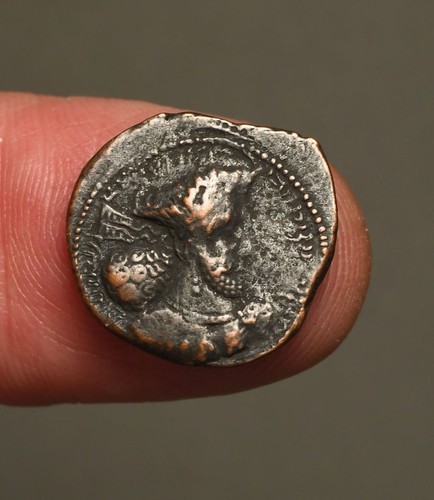
KS12-69 KUSHANO-SASANIAN. Ardashir I, c. 230-245AD. Goddess Anahita Enthroned
Ardashir Circa 230-245AD. In Iranian Zoroastrianism, Anahita was the most important female divine being. Goddess of the earth and waters. Fertility goddess. Responsible for investiture of Kings.
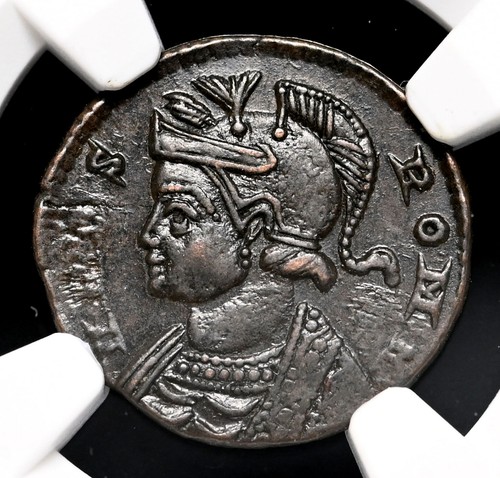
City Commemorative. AD 330-333. Æ, VRBS ROMA, Founding of Rome, NGC XF
AD 330-333. NGC and PMG Authorized dealer. Frequent new additions. Extensive inventory in all price ranges. Featured Products. No problem!

IS67-45 MONGOL OCCUPATION OF SYRIA. Hulagu at Hamah, circa 658AH, Sunface
Hulagu at Hamah, circa 658AH. MONGOL (ILKHAN) OCCUPATION OF SYRIA.

City Commemorative. AD 330-333. Æ, VRBS ROMA, Founding of Rome, NGC XF
AD 330-333. NGC and PMG Authorized dealer. Frequent new additions. Extensive inventory in all price ranges. Featured Products. No problem!

1374-82 Islamic Dynasty Jalayrid Silver Dinar Counterstamp Top Pop! NGC Vf 30
Sultan Husayan 1, this coin is the sole finest at NGC.
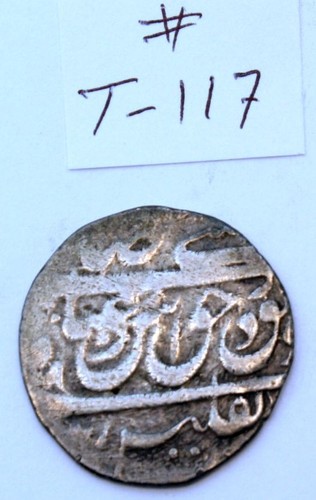
Shah Abbas II Safavid Silver Coin 2 Shahi 9 Grams 1135-1145 in Excellent Cond.
Shah Abbas II Safavid 1135-1145 Silver Coin 2 Shahi 9 Grams 304years of age in great condition. PHOTOS DOES NOT JUSTIFY THE CONDITION OF THIS COIN. I do not grade or clean coins, these are all my personal collection that I kept in a shoe box for 50 + years.